
Lego's China Expansion: Trademark Battles and Localization Strategy for Western Brands
Updated 2026-06-20
As a sourcing agent who's helped dozens of American brands enter China, I've watched Lego's journey closely. Their story proves that even with strong IP and brand recognition, success in China requires deliberate adaptation—from localizing product names to fighting counterfeiters. For any US business considering manufacturing or selling in China, Lego's playbook offers critical lessons on navigating regulations, intellectual property, and consumer preferences.
History of Lego in China
Lego’s history (乐高 in Chinese) in China goes back to 1993 when the brand’s first store was opened in Beijing. One of Lego’s biggest problems in the 90s was keeping a stable price, as China imposed large taxes on imported toys. Due to this reason, the company struggled with establishing the retail price, which ranged from tens to thousands of yuan. Therefore, Lego toys were a luxury item throughout the 90s.
Because of the high prices, many companies started creating similar toys and selling them for lower prices. It was possible because, at that time, intellectual property laws were not and, at times, still are not respected in China. One of such companies was 启蒙积木 (Enlighten). A lawsuit was filed in 1999 by Lego, and the trial ended in its favor.
In the early 2000s, Lego’s main tactic was to increase sales and popularity by widening the range of products. The company not only began coming up with new concepts for toys but also started to create products such as watches, umbrellas, and posters. They also started including Lego adverts in the 米老鼠 (Milaoshu) magazine.
The growth of Lego in China
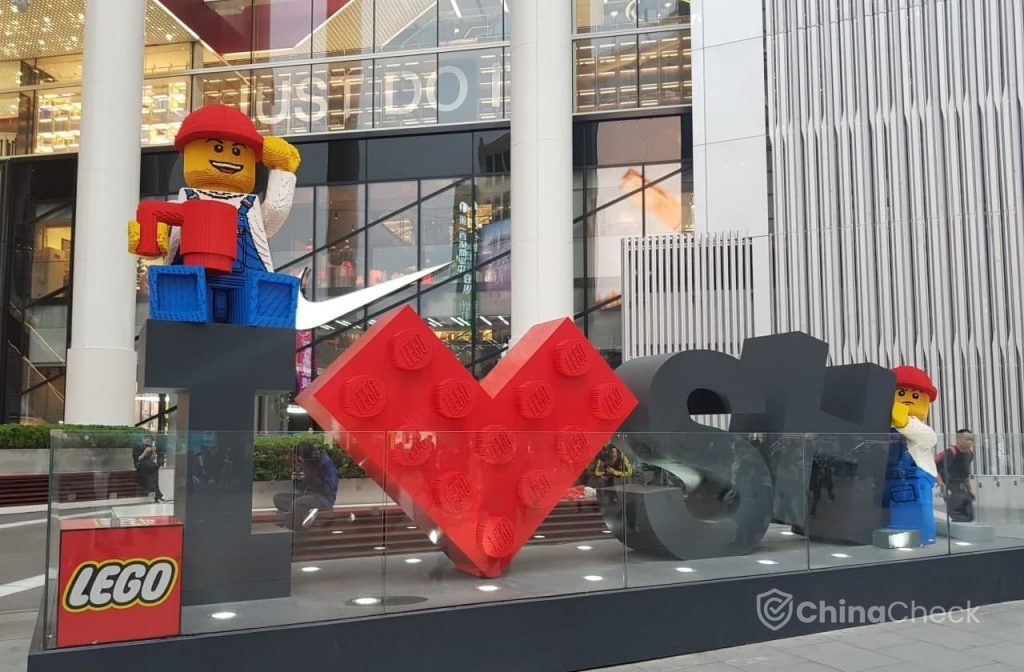
Lego continually develops and expands in China. Together with the new decade, the management decided to implement something brand new, even considered revolutionary. The new project’s main idea was “Play first and see how good our products really are.” A new store was opened in 2012 in Beijing, 2/3 of which was an experience space. A year later, a similar shop was opened in Shanghai. Between 2010 and 2012, Lego’s sales shot up by about 50%.
2018 was meant to bring another change. After a decline in sales, the company decided to reorganize, bringing plenty of changes to its Chinese branch. At the beginning of the year, there were only 10 Lego stores in China. By the end of 2018, there were already 60 in 18 different cities. The company planned to open 165 new Lego-branded brick-and-mortar stores in 2022, with more than 90 in China. China is undoubtedly gradually becoming the world’s biggest toy market.
Another intellectual property lawsuit was filed in 2018, this time against Lepin. Once again, the case was closed in Lego’s favor. It can be presumed that the Danish company trusts the regulations on the Chinese market, as there is no place for unfair competition.
Lego is also expanding its brand online, most notably through its partnerships with Chinese tech giants like JD, Tmall or Tencent, as well as other companies.
How does Lego adjust to Chinese consumers?
Firstly, a very well-chosen Chinese name should be mentioned – 乐高 (Legao). One of the name’s characters, “乐,” means joy and happiness in Chinese and brings positive connotations to customers’ minds.
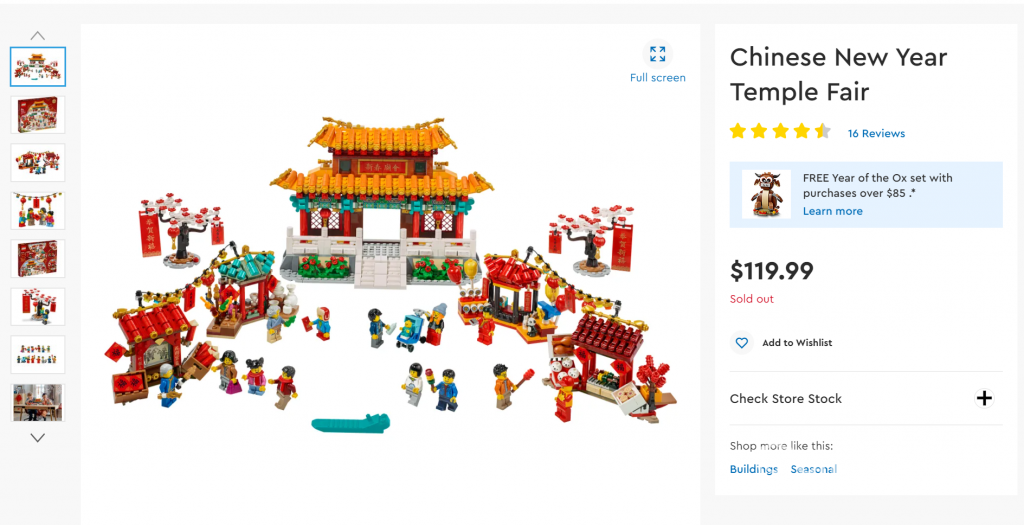
Furthermore, a couple of years ago, Lego started to sell special editions of its products on Chinese holidays. Examples of such items are sets of blocks portraying Chinese New Year’s, traditional dragon dances, or the Dragon Boat Festival. The company also added Lego parts that can form the Great Wall of China and the Shanghai city skyline.
Lego's approach—combining aggressive IP enforcement with culturally tailored products—shows that foreign brands can thrive in China with the right groundwork. Before you commit to sourcing or manufacturing there, make sure your supply chain is verified and your quality standards are locked down. That's where experienced partner like China-Check comes in: we conduct factory inspections, supplier verification, and quality control so you can focus on building your brand in China without the surprises.
Doing business with a Chinese company? Verify it before you commit
Run a verification →Verify before you pay
Get an independent due-diligence report on any Chinese company — registration, legal status, litigation and risk signals — delivered to your inbox.
Check a company now