
AQL Table Guide: How to Read and Use Acceptance Sampling Charts
Updated 2026-06-20
After two decades of sourcing from China, I can tell you one thing: the AQL table is your most powerful tool for avoiding rejected shipments and costly disputes. It's not just a chart—it's the standard that determines whether you accept or reject a batch. In this guide, I'll show you exactly how to read and apply it so you can protect your margins and reputation.
What is an AQL table for inspection?
AQL stands for Acceptable Quality Limit. The AQL table is a tool used in quality control processes to determine the maximum number of defective units. If there are too many defective units, the batch is rejected. Ordering AQL inspection ensures buyers that products meet certain quality standards before reaching the end consumer.
Why do you need the AQL table? It helps balance the cost of inspection with the risk of accepting defective goods.
AQL Standards
AQL standards were established by organizations like ISO (International Organization for Standardization). They are international and used across many industries.
There are some regulations that set AQL standards:
- ISO 2859
- ANSI/ASQC Z1.4
- ABC105
- NF06-022
- BS 6001
- DIN 40080.
AQL Sampling Plan and Tables – how to read AQL charts?
The AQL sampling plan is used to select samples from a batch for inspection. The plan helps in making informed decisions about the quality of the entire batch from the inspection report.
AQL Inspection Table with practical examples
The AQL chart provides a reference for determining the sample size and acceptance number for different batch sizes and AQL levels. The table is what quality inspectors use to decide how many units to inspect and how many defects are acceptable.
Table A contains the following sections:
- general inspection levels – visual, measurement control etc. non-destructive testing
- special inspection levels – all destructive testing
- lot size – the minimum and maximum number of items from the lot
- code letters assigned to lot size and inspection levels.
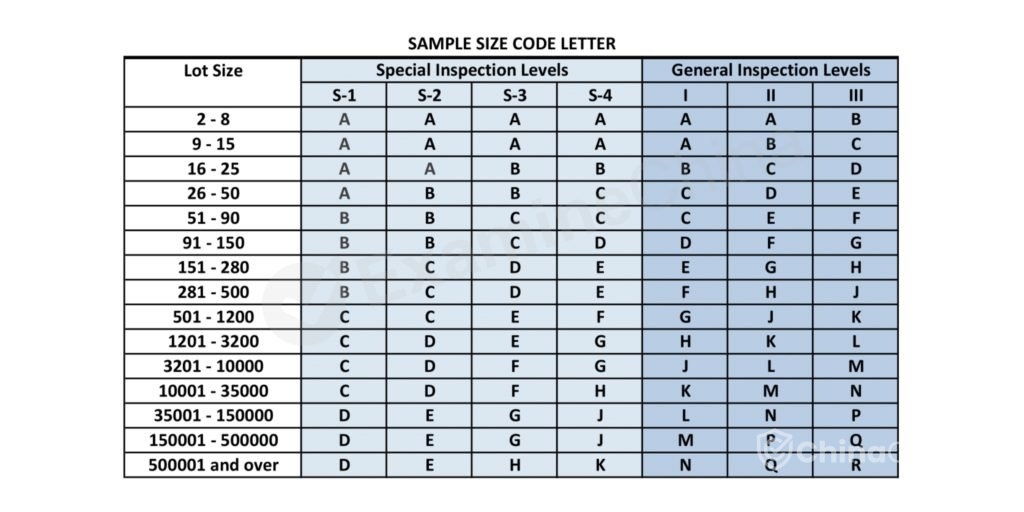
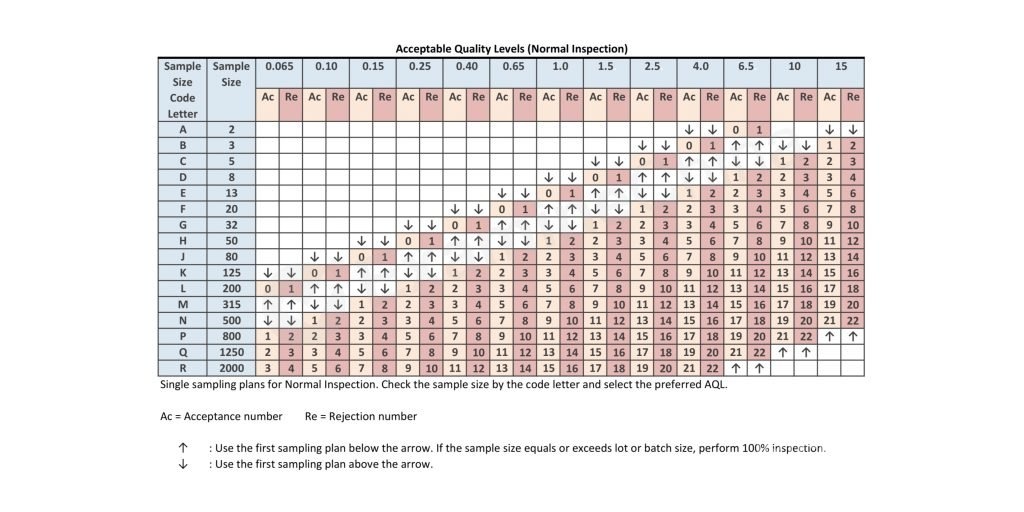
Table B for normal inspection includes:
- code letters – sample size code letters, which are selected according to table A
- sample size – the number of samples to be verified for a given code letter
- matrix with the values of acceptable maximum and rejected minimum
- AQL levels expressed in %
- 0 or 0.065 for critical defect
- 2.5 for major defect
- 4 for minor defect
AQL Inspection Table – practical example no. 1
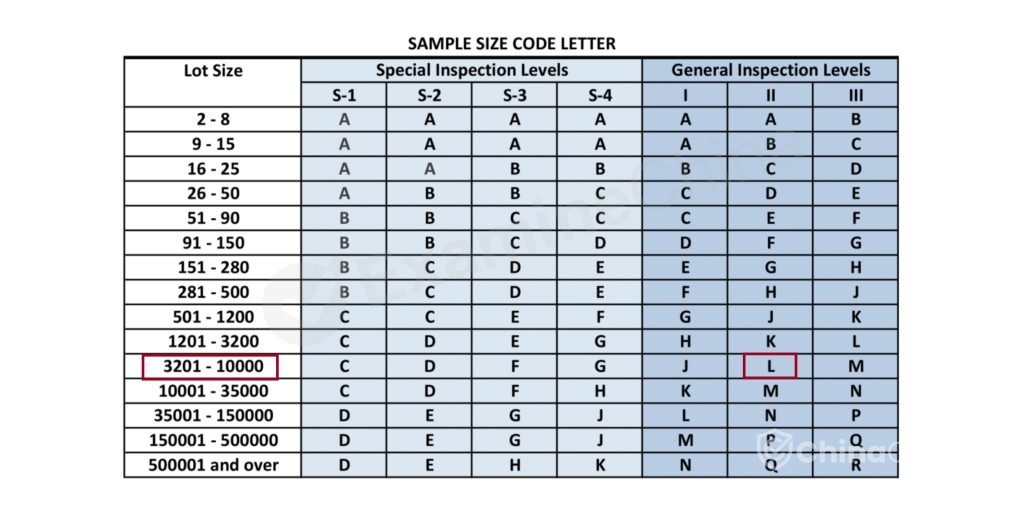
Quantity: 3500 pieces
Inspection: normal, level II and 2.5 > the general inspection level is L [see table A]
Selected samples: 200 pieces [see Table B]
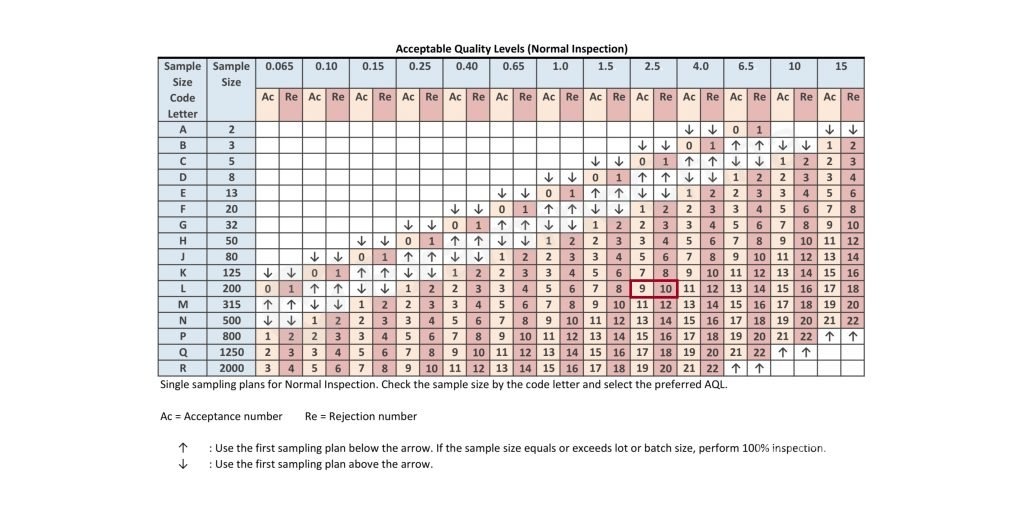
The acceptance threshold: 10 pieces
What does it mean? If in a number of selected samples more than ten pieces are defective, the batch should be rejected.
AQL Inspection Table – practical example no. 2
Quantity: 2500 pieces
Inspection: normal, level II and 2.5 > the general inspection level is K [see table A]
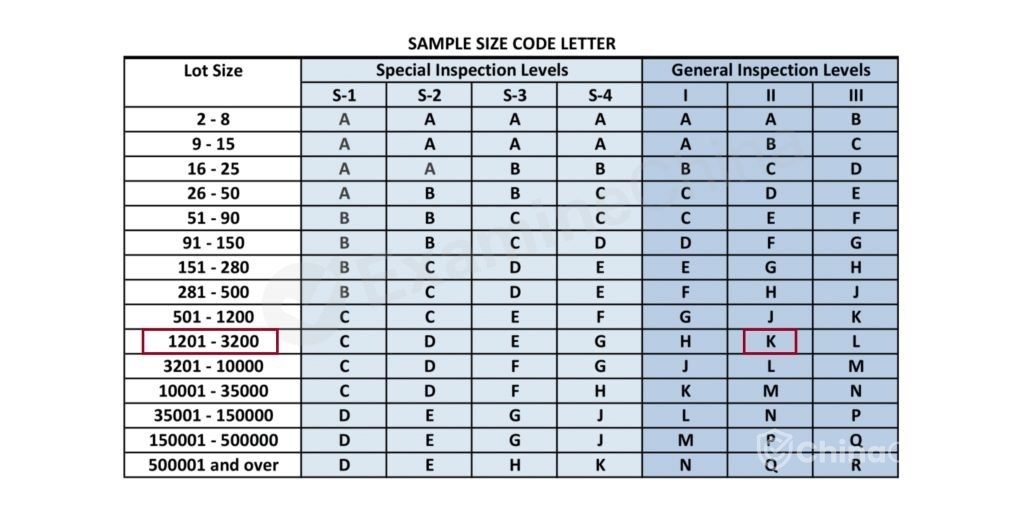
Selected samples: 125 pieces [see Table B]
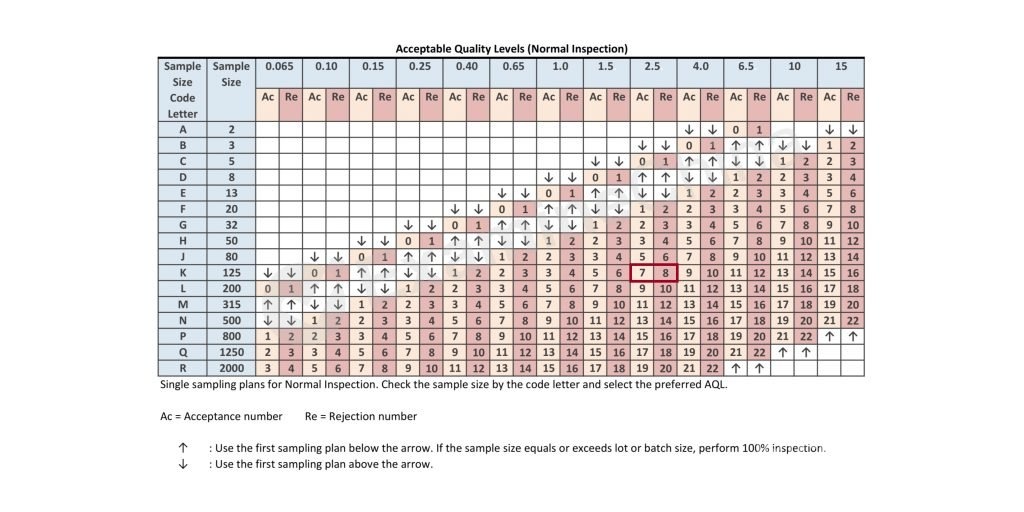
The acceptance threshold: 8 pieces
What does it mean? If in a number of selected samples more than eight pieces are defective, the batch should be rejected.
What to do with rejected pieces?
Non-conforming pieces can be disposed of, replaced, or repaired. You can also offer to buy rejected pieces at a lower price.
AQL Calculation
To calculate AQL, use this formula:
- Determine your shipment lot quantity
- Select Special or General inspection level
- Select critical, major, or minor AQL for all defects
- Refer to Table A and Table B to determine the inspected quantities and accepted defects
AQL for inspection – AQL table PDF
The AQL table for inspection provides guidance for quality inspectors who use a sampling plan. During inspections, they determine the acceptability of a batch and make an inspection report so the buyer can make informed decisions.
Getting the AQL table right is critical, but it's only the first step. To truly safeguard your business, pair your knowledge with professional, impartial inspections. At China-Check, our inspectors use these exact standards to give you clear, actionable reports. Before your next shipment, let us handle the sampling and verification—get in touch to learn how we can help you maintain quality, every time.
Doing business with a Chinese company? Verify it before you commit
Run a verification →Verify before you pay
Get an independent due-diligence report on any Chinese company — registration, legal status, litigation and risk signals — delivered to your inbox.
Check a company now